When you click the link, it will take you to the corresponding page.
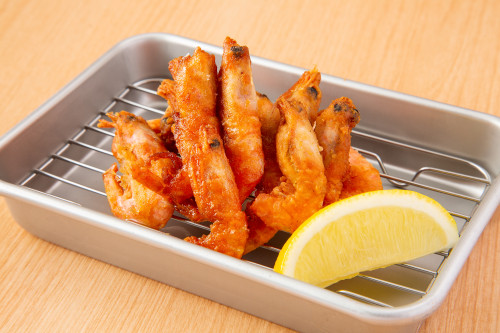
甘エビの唐揚げ
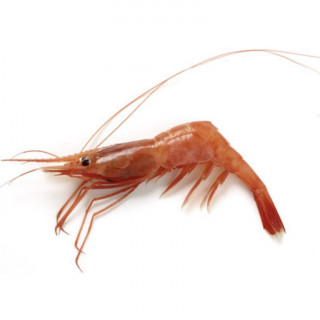
Like many ingredients, sweet shrimp is more commonly known by a popular name rather than its formal one. Its official name is the northern pink shrimp, but it is widely referred to as sweet shrimp. The term “sweet” comes from the Japanese name “Amaebi” (甘エビ), where “ama” means sweet, while its formal Japanese name is “Hokkoku Akaebi” (北国赤蝦). Sweet shrimp naturally has a reddish color even when alive and features a soft shell. Interestingly, freshly caught shrimp does not taste sweet. Its characteristic sweetness develops over time. This is because sweet shrimp, which inhabits deep, cold waters, contains a high level of proteolytic enzymes that continue to break down proteins after death, producing amino acids. This process creates a smooth, slightly melting texture known as “toromi” and enhances both umami and sweetness. Considering transportation and distribution time, the shrimp is often at its peak flavor when it reaches the market.
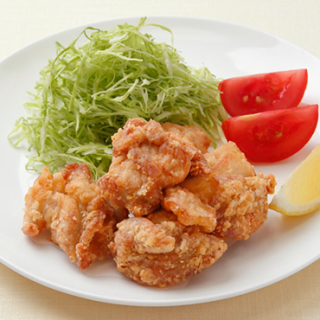
Karaage (唐揚げ) is a dish where the ingredients are coated in a thin layer of flour and fried in oil without any additional batter. When you hear the word Karaage, you might first think of fried chicken, but it can also refer to fried fish or vegetables that are coated in flour and fried. The most common cut of chicken used in Karaage is thigh meat. The "Kara" (唐) in Karaage refers to the Tang Dynasty in China, where the frying technique is said to have originated. At that time, tofu was used instead of chicken. However, with the development of the poultry industry in Japan, Karaage made with chicken is now the most popular variation. There is a similar dish called Tatsutaage (竜田揚げ), but the difference is that Karaage is mainly made with flour, while Tatsutaage is made with only potato starch. Since Tatsutaage is coated in potato starch, it has a characteristic light color. Another difference is that originally Karaage was not marinated, but Tatsutaage is marinated before frying. Nowadays, even Karaage is usually marinated, so the main difference between the two dishes is the type of flour used. When you order Karaage at a Japanese restaurant, it usually comes with a slice of lemon that you can sprinkle over the dish. However, there is an unspoken rule that you should not add the lemon without the consent of the person you're dining with, since some people prefer to enjoy the original taste of the Karaage without the lemon. It's similar to how you shouldn't pour sauce over someone's portion of tangsuyuk (sweet and sour pork) without checking if they want it